
Welcoming AI into Our Work!
Back in 2004, when I began my career, Artificial Intelligence was not a phrase we heard often. It belonged to books and conversations about the future, something distant and slightly abstract. Two decades later, AI has quietly found its way into my everyday workflow, from data analysis to documenting insights. But its place in our work did not begin with conviction. It began with curiosity, and a fair amount of skepticism.
At Medha, much of what we choose to explore is shaped by a culture of asking questions. Over the years, we have learned that meaningful insights rarely come from the answers we expect, but from questions we did not think to ask. This has guided how we approached AI; as a tool to experiment with.
When AI first entered our Data and Impact vertical, we almost treated it like a new team member we weren’t entirely sure about. Would it take away our thinking? Would it dilute our judgment? Was it genuinely useful, or were we simply responding to the momentum around it? These questions shaped our early engagement far more than any excitement about its potential. Over time, through consistent experimentation, AI began to prove its value. It became a way to extend our thinking. It helped us move faster in structuring problems, explore multiple analytical pathways, and at times, surface perspectives we may not have considered on our own.

What became clearer was this: the real value of AI was not in giving answers, but in helping us ask better questions. At the same time, rigor remained non-negotiable. If AI helped us explore possibilities, tools like R helped us verify them. R has become integral to how we work with data—whether it is cleaning and structuring datasets, running statistical tests, or building visualizations that make patterns easier to interpret. It allows our analysis to be systematic and reproducible. Once a script is written, it can be rerun on updated datasets, enabling us to revisit questions, refine models, and validate results without starting from scratch.
A recent analysis on employment outcomes for Medha alumni brought these elements together. While examining the role of internships, AI helped us think through the analytical approach and structure the problem more efficiently. The findings were clear: alumni who completed internships were twice as likely to be earning after graduation compared to those who did not. R-based statistical tests validated what had long been an intuition. More importantly, this insight allowed us to reinforce the role of internships within our programs and communicate their value with greater confidence to our partners and funders. There is a certain satisfaction in this process, the balance between discovery and discipline. That said, this is not a story of having figured AI out.
Our journey has been iterative, with its share of missteps and course corrections. AI, like any tool, comes with limitations. In contexts like ours, where we work with sensitive data, its use requires caution, clear boundaries, and consistent human oversight. There have been moments where outputs needed questioning, where context was missing, and where judgment could not be outsourced. What remains unchanged is the role of human thinking. AI does not replace our ability to interpret context, make decisions, or act responsibly. What it does offer is the ability to test ideas more rigorously, move with greater efficiency, and uncover patterns that might otherwise remain hidden. If there is one lesson from our experience so far, it is this: the value of AI is not in the tool itself, but in how we engage with it. Curiosity drives exploration, but rigor ensures that what we find holds meaning.
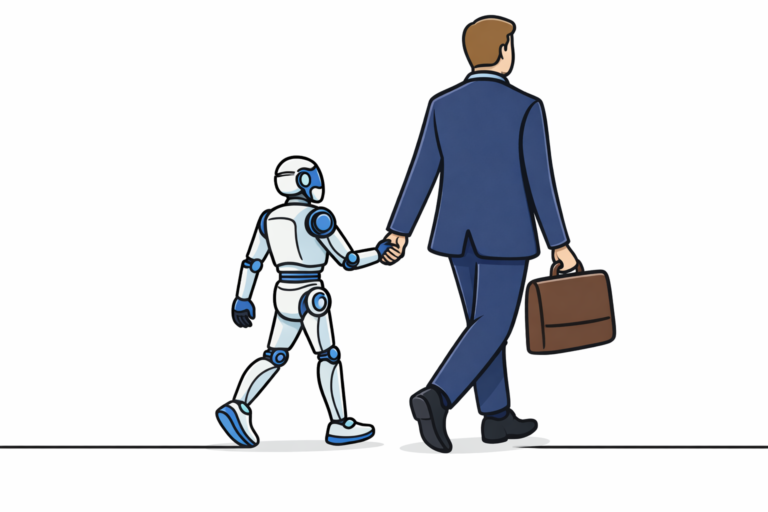
As these tools continue to evolve, the real question is whether we continue to ask better, sharper, and more relevant questions alongside them. We hope more practitioners and organizations will explore how AI can support thoughtful analysis and informed decision-making. And as we continue to learn, we look forward to hearing from others who are experimenting in similar ways. Progress, after all, often begins the same way it did for us; with a question, and the willingness to pursue it.