
Looking for Impact Beyond Numbers
“What is the impact of your programs?”
It is a question that follows almost everyone working in the development sector, and rightfully so. Governments, organizations, funders, and individuals invest their resources, trust, and belief into what is often an almost dream like mission that we “sell” to them in hopes of onboarding them into the change we aspire to create. Therefore, every contributor deserves to know the impact of these efforts and whether they are truly making a difference.
In my two decades of experience, I have answered this question in many different rooms. Sometimes it is during government meetings or in conversations with donors who want to understand the impact they are supporting. And sometimes, it is during internal discussions where teams look toward leadership for reassurance that their work is truly making a difference. More often than not, I have delivered these answers through Excel sheets, presentations, and dashboards.
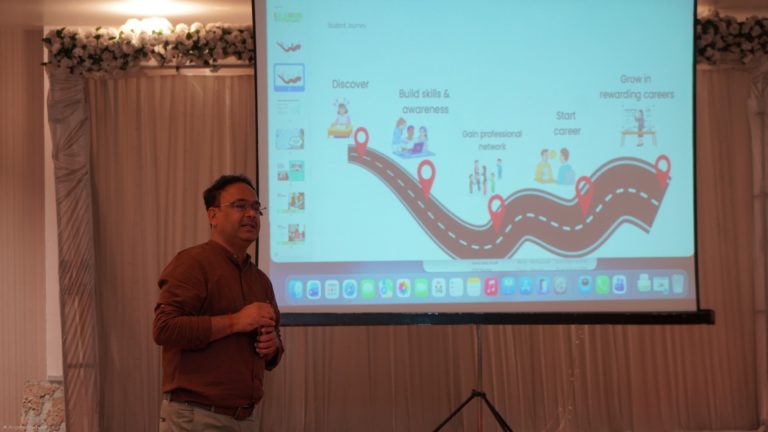
And somewhere along the way, because of this constant need to prove impact, we have turned impact measurement into a race. Everything begins to revolve around numbers, targets, and reporting cycles. Every intervention needs to show immediate outcomes. Slowly, we turn the very individuals this work hopes to serve into data points and case studies instead of humans as they are, shaped by aspirations, struggles, and growth alongside the role of our intervention.
But I say this in no way to discredit development professionals. Being one of them, I understand how difficult it is to keep holding onto the string of hope and the flag of change. Impact numbers do play an important role in keeping that belief alive. They serve as a testament to the work being done, bring accountability to the sector, and add a sense of discipline and direction to our efforts.
However, due to this comfort being attached with linear metrics, we risk losing the real story. Our definition of “data” has become increasingly narrow. If a computer can process it, we consider it valid. If it can be plotted on a graph, we call it impact. But what about changes that are difficult to quantify?
For example, at Medha, we often speak about helping youth pursue rewarding careers of their choice. But who gets to define what “rewarding” truly means? Is it funders viewing outcomes from a distance, governments measuring employment numbers, or field staff interpreting aspirations through their lens? Or should it be the young people themselves, who understand their realities, responsibilities, and dreams better than anyone else?

The definition of something as central as rewarding in our brand message, however, may look very different for each of our stakeholders. For some, a rewarding career may mean income above a certain number. For others, it could mean confidence, exposure to opportunities, or simply the ability to support their family while continuing their education.
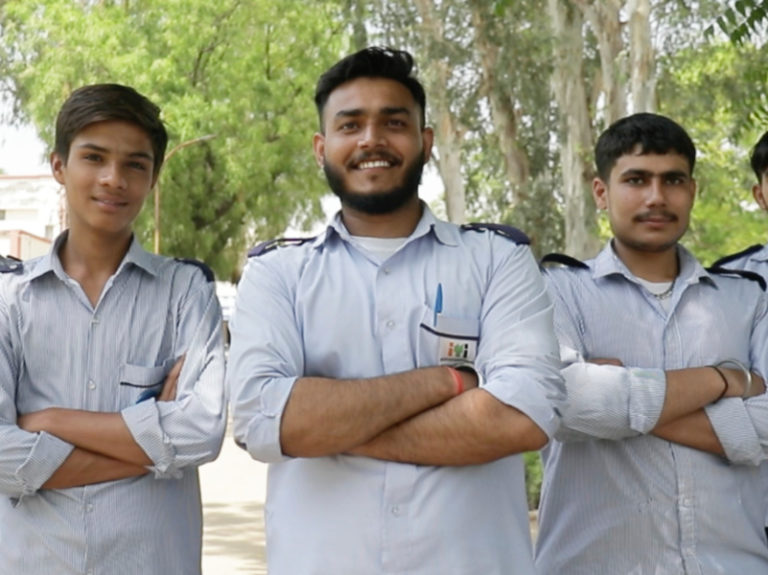
I recall meeting Muskan, a student from Nodal ITI Muzaffarpur, Bihar, and a first generation learner. She enrolled in our Foundational AI program where she explored artificial intelligence and digital tools for the first time. Initially hesitant because of her limited computer knowledge, she later described completing the 15 hour program as a victory.
Then there was Tejinder, a student from ITI Yamunanagar, Haryana, who once told me, “Sir, earlier I was afraid. I did not know how I would survive. Now I feel I can work in any workshop, in any company.” No metric truly captures a sentence like, “I am no longer afraid.” Similarly, one ITI instructor after conducting an industry visit with his students told me,“for the first time, I feel like I am part of something bigger than my trade classroom.” That statement signals systemic alignment. It signals identity change.
Change often travels through everyone involved in the journey, not just the individuals we directly aim to serve. But where do these stories of change find a place in our impact graphs? How does one quantify gaining confidence or taking agency over one’s own future? In what graph do we represent mindset shifts or conversations that signal cultural change?
These shifts rarely fit neatly into percentages or predefined indicators. Yet, they are often the real indicators of the systemic change we aim to achieve. Most linear metrics assume a predictable journey of input, output, outcome, and impact. But systems do not move in straight lines. They move through resistance, human behavior, and unexpected accelerations.
Therefore, we must pause this race of filling our sheets with the most “extraordinary data” and remind ourselves that development work is ultimately about humans, humanity, and hope. Perhaps it is time we collectively redefine what we consider “evidence” of impact, because some of the most meaningful change can be found in the quietest of smiles and shifts, if only we remember to look beyond the numbers.

So the next time someone asks,“what is the impact of your programs?”, remember to share not just the statistics, but also the stories of courage, confidence, and change that made this work worth starting in the first place.